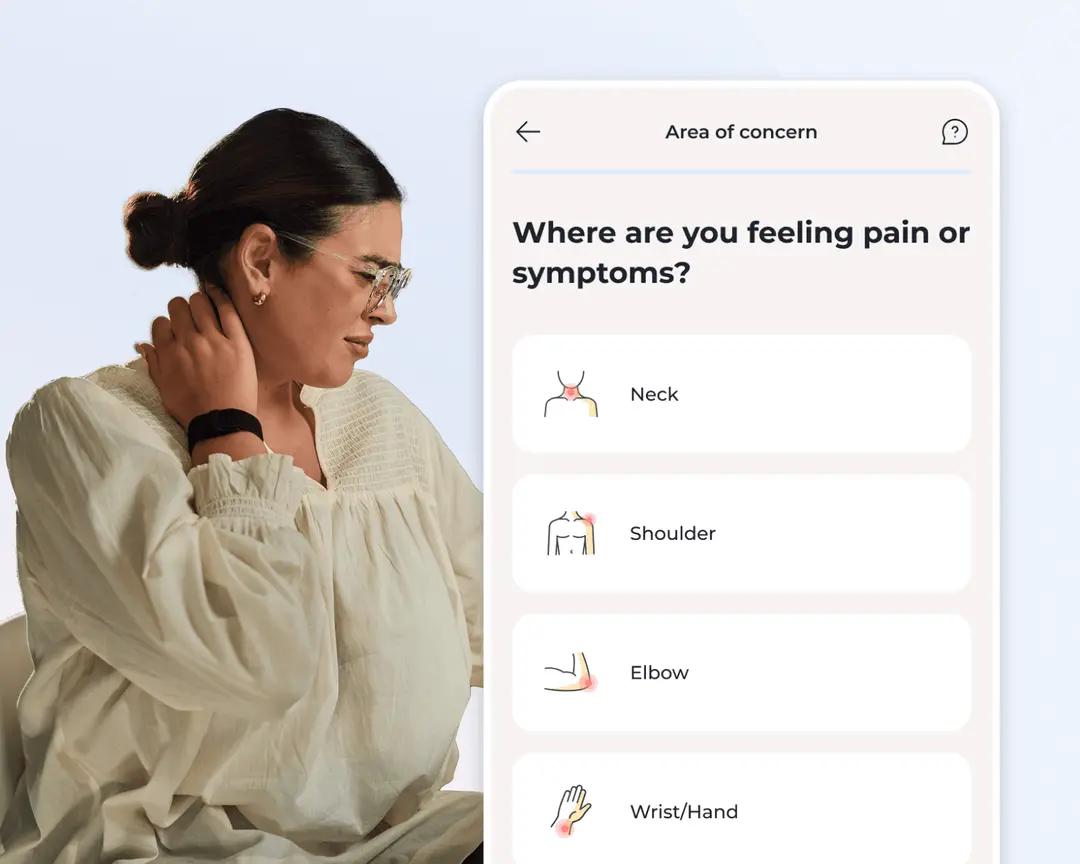

Start Sword’s personalized physiotherapy from home
Sword summary warm-up
Don't have time for the full workout? We've got you covered with a quick, high-intensity session. Here are the key takeaways:
- OHIP covers physiotherapy, but only for specific groups. Most working-age adults do not qualify.
- If you don't qualify, private physiotherapy costs $80 to $150 per session; employer benefits often cover $350 to $750 annually.
- Wait times for publicly funded care can be significant. If you need care now, employer benefits or private clinics may be more practical.
- If your plan includes coverage for Sword, you can access a personalized AI Pain Care with 24/7 access from home
You have paid into Ontario's health care system your whole working life. It covers so much, especially for life-threatening care. It is reasonable to expect OHIP would cover something like physiotherapy that could genuinely help you move without pain, or prevent a temporary problem from becoming chronic.
OHIP does cover physiotherapy. But the coverage is often narrower than most people expect, and most working-age adults don't qualify. This is not a reflection on whether you need care. It is how Ontario's public system is funded and structured. Understanding your available options takes the sting out of that realization and points you toward care that is genuinely accessible to you.
Does OHIP cover physiotherapy?
Yes, OHIP covers physiotherapy.
But coverage is limited to specific groups. If you are working-age and managing pain or limitation without a recent surgery or hospital stay, you likely do not qualify.
The groups that do qualify are outlined in detail below. If you fall into one of these covered groups, you can access publicly funded care with no out-of-pocket cost. If you do not, you will need to explore other funding paths which we explain later in the guide.
Which groups have OHIP physiotherapy coverage?
OHIP covers physiotherapy for these specific groups with a few exceptions and variations:
- People under 20 years of age. If you are a teenager or younger, OHIP covers physiotherapy at a Community Physiotherapy Clinic with a referral from a physician or nurse practitioner.
- People 65 or older receiving in-home physiotherapy. If you are a senior and need care delivered at your home, OHIP funds it.
- Anyone after a hospital stay or surgery in the past 12 months. If you have had an overnight hospital admission or outpatient or day surgery within the last 12 months for a condition requiring physiotherapy, OHIP covers your care.
- Recipients of Ontario Works or Ontario Disability Support Program. If you receive provincial income support, you qualify for coverage.
- Residents of long-term care homes. Physiotherapy is covered as part of your resident care.
- People with a flare-up from a previous condition. If your current symptoms represent a flare-up or worsening from a previous fall, accident, surgery, or chronic condition and this worsening has led to a measurable decline in function or movement, you may qualify.
If you fall into one of these categories, you are likely eligible for physiotherapy covered under OHIP. If you do not see yourself here, you can explore other funding options.
One thing to know upfront: OHIP-funded physiotherapy is only available at designated community physiotherapy clinics, not at private clinics. This affects which therapists you can see and how quickly you can be seen.
What to expect from OHIP-funded physiotherapy
If you qualify, here is what the process looks like.
- You need a referral. Walk into your GP's office (or contact a nurse practitioner), explain that you need physiotherapy, and they will provide a referral. Some Community Physiotherapy Clinics have begun to allow self-referral as of October 2025. If you are interested in this route, contact your nearest clinic directly to confirm whether they accept self-referrals.
- You contact the clinic. Once you have your referral, you reach out to the designated Community Physiotherapy Clinic nearest you. They will give you an appointment date. Depending on where you live and the time of year, this could be anywhere from a few weeks away to several months. Wait times vary significantly by region and clinic capacity.
- You attend your first assessment. This appointment is longer than follow-up sessions because the physiotherapist gathers your full history, understands your limitations in detail, and builds a treatment plan specific to you.
- You begin treatment sessions. Follow-up sessions are shorter and more focused. They build on the assessment and progress your care forward.
- Treatment continues as long as progress is being made. There is no preset limit on the number of sessions. You continue as long as you are making measurable progress toward your goals. Once your goals are met, or if your progress plateaus (meaning no further improvement is occurring), coverage ends.
This structure is designed so you are not paying for sessions that are not moving you forward. But it also means you need to be realistic about what physiotherapy can and cannot do for your specific condition. One real constraint worth naming: some clinics deliver care in group or shared sessions rather than one-on-one treatment.
One-on-one physiotherapy allows your therapist to adjust every movement, every cue, every progression to your specific body and response. Shared sessions are still valuable and more efficient to deliver, but they are different. When you book your appointment, ask about this explicitly so you know what to expect.
Limitations of OHIP-funded care (and what they actually cost)

If you qualify for OHIP coverage, the benefit is real. You pay nothing per session. But the coverage comes with constraints that affect whether it works for your life.
- Wait times are significant and unpredictable: Community Physiotherapy Clinics manage high demand with limited public resources. Depending on where you live, you might wait 6 to 8 weeks for your first appointment. In some regions and seasons, wait times extend much longer. While you are waiting, your pain persists. Some people wait so long that their symptoms change or they adapt their lifestyle and movements to avoid pain or discomfort. This is where chronic pain can develop, or symptoms can become more acute to the point where more invasive treatment options are required.
- Clinic locations might not be convenient: OHIP-funded physiotherapy is only available at designated Community Physiotherapy Clinics. If the nearest one is not on your commute or in an easy-to-reach location, accessing care regularly becomes a logistics problem. You might spend 45 minutes in transit to get a 30-minute appointment. Over six to eight weeks of treatment, that adds up to real time and cost in fuel, parking, and scheduling disruption.
- Some care is delivered in group sessions: Shared sessions are more efficient to deliver than one-on-one physiotherapy, but they offer less personalised attention. Your therapist cannot adjust every movement for your specific body. You are one of several people in the room, each with different needs.
These are not reasons to avoid OHIP-funded care if you qualify, but you should be aware of this and consider whether this style of care is right for you. If the wait time means you cannot get care when you actually need it, or if the clinic location is prohibitively far, you do have other paths forward.
Three alternatives to OHIP-funded physiotherapy
Most working-age Ontario adults do not qualify for OHIP-funded care. This does not mean physiotherapy is not accessible to you. It means you are exploring a different funding track. Understanding your options makes the decision clearer.
Path 1: Private physiotherapy clinics
Private clinics are available immediately. You can usually book an appointment within days, not weeks. You choose your specific therapist. You get one-on-one care. You control the timing and frequency of appointments around your schedule.
The trade-off is cost. A private clinic assessment typically costs $135 to $175 according to Ontario Physiotherapy Association 2024 fee guidelines.¹ Follow-up sessions range from $80 to $150 per session.¹ If you need 8 to 12 sessions over 6 to 8 weeks, a typical course of physiotherapy, you are looking at roughly $800 to $1,800 out of pocket.
For many people, this cost is the barrier that stops them from getting care at all. But if you can access it, you get immediacy and depersonalization that OHIP-funded care cannot provide.
Path 2: Employer or health plan benefits
If your employer offers extended health benefits, your coverage document should list physiotherapy. Many plans include physio coverage with an annual maximum of $350 to $750 and coinsurance of 80 to 100 per cent.² This means your plan covers a percentage of each session, and you cover the remainder.
How much you actually pay depends on your specific plan. Some cover a higher percentage; some have a lower annual max. The key is: your employer has already negotiated this benefit on your behalf. The cost is shared. And you typically access private clinics immediately, eliminating the need for referrals or waiting periods.
If you do not have employer benefits, you can still use a private clinic. You just absorb the full cost yourself, which is why many people delay care.
Path 3: Physiotherapy from home with Sword
Most people manage pain or physical limitation alone between appointments. That is when motivation drops. That is when you are unsure whether you are doing the exercises right. That is when most programs lose people.
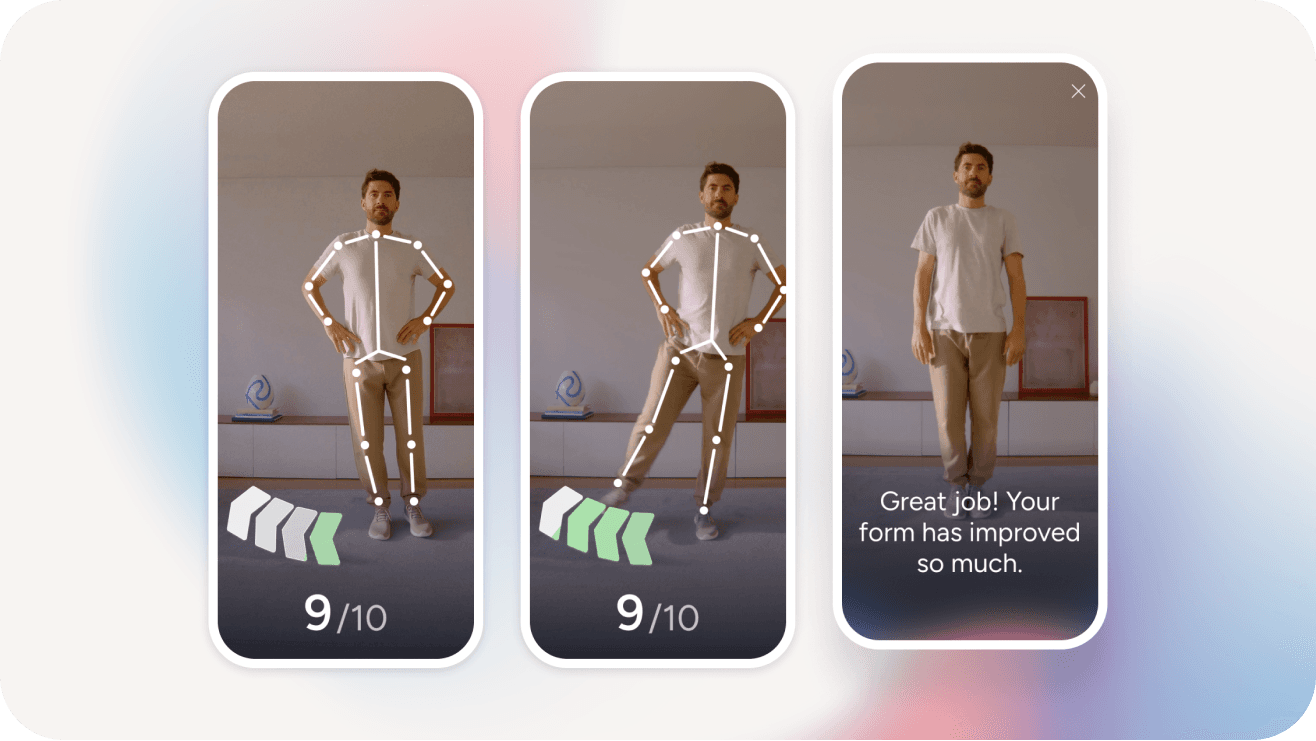
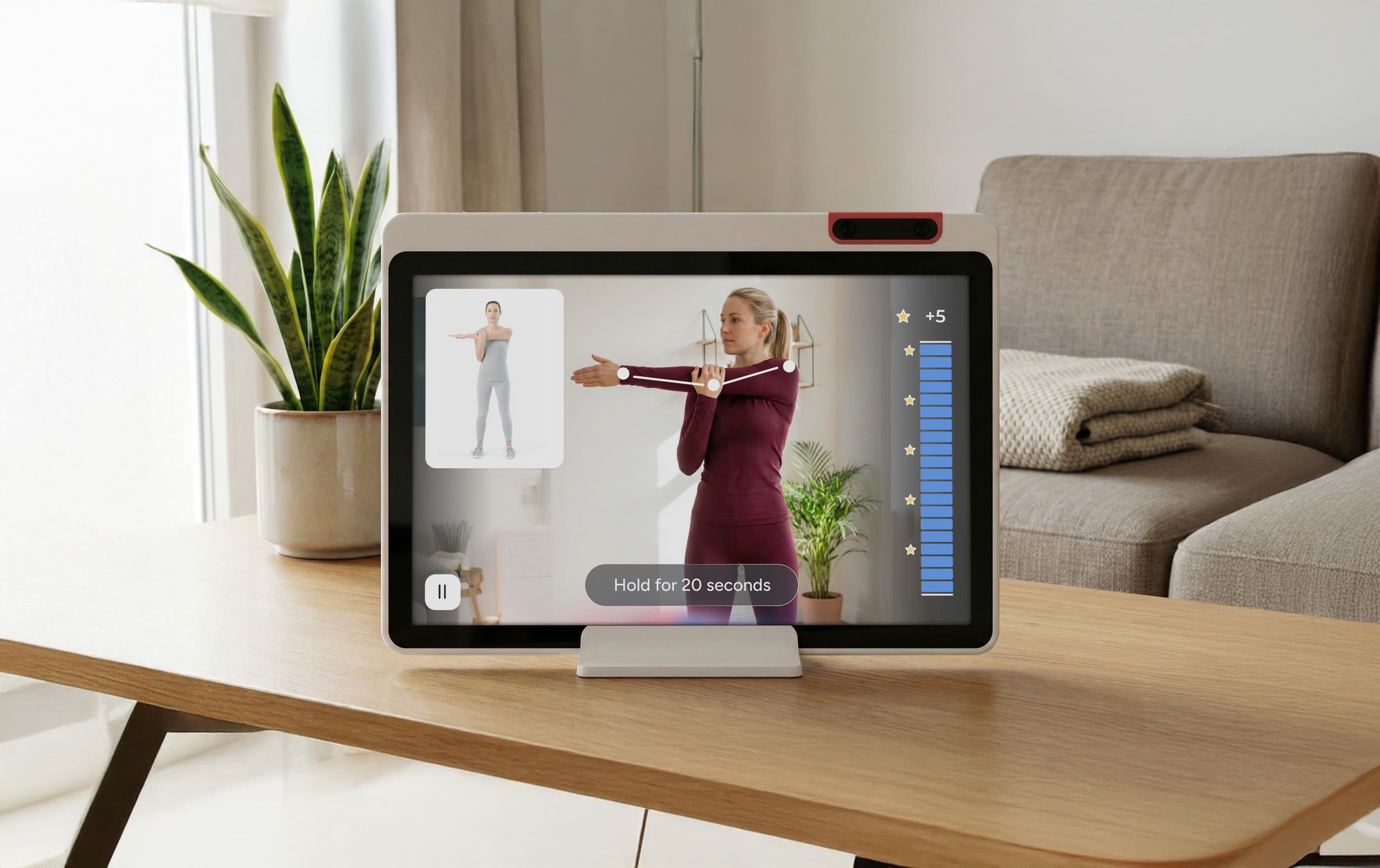
What if your care team was available whenever you needed them, with 24/7 support and real-time feedback to guide you when you're completing your recovery programme from home?
Sword gives you a personalized care plan accessible through the Sword app. Members are matched with a degree-qualified physiotherapist who creates a care plan based on each individual's symptoms, health goals, and lifestyle. Your care partner monitors and adjusts your plan based on your progress.
What getting better with Sword actually looks like
Sword gives you around the clock care from the comfort of home
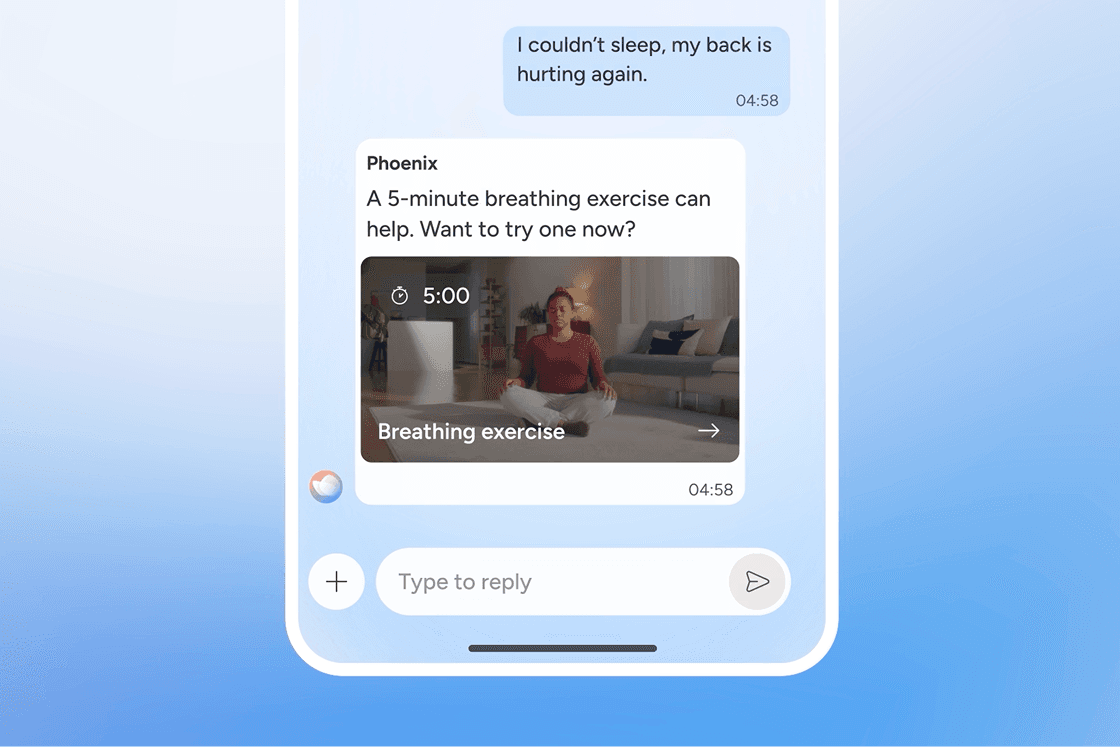
Between sessions, members have access to 24/7 support within the Sword app:
- Pain flares at midnight? You get guidance immediately, not an instruction to "wait and see."
- Unsure whether to push through an exercise or rest? You have instant feedback without waiting for your next appointment.
- Your progress changes and your needs shift? Your treatment plan adapts to you, not on some fixed schedule.
This is why people complete Sword plans at an 81% rate (nearly twice the completion rate of in-person physiotherapy³).
Many Canadians with an employer benefits plan may already have coverage for Sword. This gives people another path to care when public coverage does not fit their situation.
24/7 access to care gives you back control of your recovery
Sword offers a different funding track from OHIP. You are not waiting for public system capacity. You are accessing the employer benefits you already have, available immediately, with clinical care that does not stop between sessions. When it's easy to complete your care plan, you get the consistency you need to get back to the best version of yourself.
Sword gives you access to care from anywhere at any time you want. All you need is the Sword app. You don't need to schedule an appointment, commute to a clinic, then follow a fixed plan blindly. You can check your coverage in just a few minutes to find out whether your plan includes Sword.
Start physiotherapy from home

Sources
- 1
Ontario Physiotherapy Association, 2024 Fee Guidelines
- 2
DeKuyper K. Physiotherapy Coverage via Health Insurance Plans. HealthQuotes.ca; 2023. https://healthquotes.ca/physiotherapy-coverage-via-health-insurance-plans
- 3
Sword Health outcomes data, October 2024. Sword reports an 81% completion rate for its AI physiotherapy programs.
- 4
APTQI data on in-person physiotherapy completion rates
- 5
Sword Health outcomes data, October 2024. Among members who started with moderate to severe pain, up to 69% were free of limiting pain by the end of the programme.
- 6
Sword Health. Thrive digital physiotherapy. Explains how Thrive works through the Sword app, including personalized care plans, guided sessions, and support from Phoenix, Sword's AI Care Specialist. https://swordhealth.com/articles/thrive-digital-physical-therapy
- 7
Correia F, Wernick M, Yanamadala V, et al. Digital physiotherapy for musculoskeletal pain: evidence from a decentralized randomized controlled trial. npj Digital Medicine. 2023.