Check if Move is covered for you
The Sword summary warm-up
If you don't have time for the full article, here are the key takeaways.
- Weight regain after stopping Saxenda is common, but it is not inevitable — and it is not your fault.
- Up to 39% of weight lost on GLP-1 medications can come from lean muscle, not fat.¹ Losing muscle slows your metabolism — which is part of why weight comes back faster after stopping.
- Eating less after stopping can make things worse, not better.
- Strength-focused movement is what protects your results — not willpower, not stricter eating.
- Sword Move gives you a structured, clinically guided movement plan you can follow from home.
You earned these results. The scale moved in a way it had not before. Appetite became manageable. For a lot of people, Saxenda is the first time weight loss has felt truly sustainable.
Which is exactly why stopping feels so uncertain.
Maybe your coverage is ending. Maybe the cost has become too much. Maybe side effects have made the medication harder to tolerate at a higher dose. Or maybe you are thinking ahead, knowing you cannot count on this prescription indefinitely, and you want to understand what happens to the progress you have worked for.
That uncertainty is real. The fear that everything you lost will come back is grounded in something that actually happens. The good news is that understanding why it happens puts you in a better position to prevent it.
What happens to your body when you stop Saxenda
Saxenda works by suppressing appetite and slowing how quickly your stomach empties. When you stop taking it, those effects stop too. Appetite comes back within a few days, usually close to where it was before you started.
Most people expect that part. What is less often explained is what happened underneath during treatment.
When appetite goes down significantly, food intake drops. So does something most people do not think about: the small, incidental movement of daily life — steps, errands, standing up. The body gets quieter, and without a movement plan to balance things out, it draws on both fat and lean muscle to meet its energy needs.
Over time, lean muscle declines. Research suggests that up to 39% of weight lost during GLP-1 treatment may come from lean muscle rather than fat, especially in people who are not exercising during treatment.¹ Muscle burns calories even at rest. Lose it, and your metabolism can slow even if the number on the scale looks good.
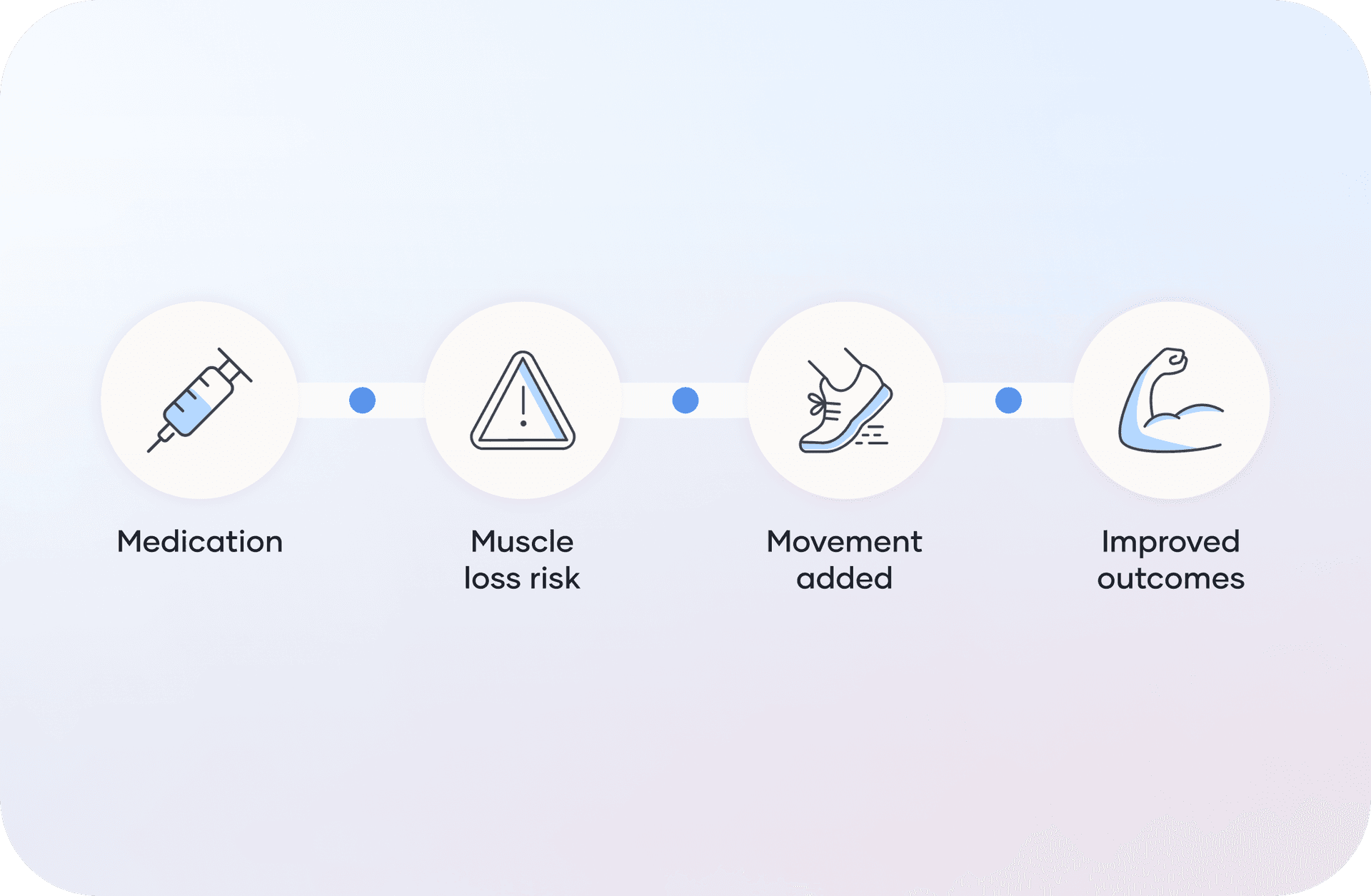
When you stop Saxenda and appetite returns, your body is working with less muscle and a slower metabolism than before you started. Calorie intake goes up. Calorie burn does not follow. That gap is where weight comes back.
Studies suggest that up to two thirds of weight lost on GLP-1 medications is regained within a year of stopping.² That is not a failure. It is a biological response to the medication ending. Understanding that makes it easier to address.
Stopping suddenly versus stepping down: does it matter?
Saxenda is started at a low dose and increased gradually. Some people prefer to step back down gradually when stopping, especially to ease any GI symptoms. Others stop more directly without much difficulty.
There is no strong clinical reason to taper. The tapering question matters far less than what you do in the weeks after stopping. The protection that keeps weight off does not come from how you stop — it comes from what you build while you are still on the medication.
Talk to your prescriber before making any changes to your dose.
The one thing that determines whether weight comes back
Here is a more useful question than "will I regain weight": what determines how much comes back, and how quickly? The answer is lean muscle — specifically, how much you preserved during your time on Saxenda.
Muscle sets your resting metabolic rate. The more lean muscle you carry, the more calories your body burns without intentional exercise. When muscle is lost during weight loss, metabolism can drop. When the medication ends and appetite returns, a body with less muscle tends to store fat more readily.
Two people can lose the same amount of weight on Saxenda and have very different experiences after stopping. The difference often comes back to lean muscle.
Can you keep the weight off after stopping?
Yes. The outcome is not fixed.
Eating less after stopping is unlikely to help. When muscle is already depleted, cutting calories further can accelerate lean mass loss and slow metabolism further. People who restrict more after stopping often find weight returns faster, not slower.
The approach that has the most evidence behind it is strength-focused movement. Resistance exercise signals your body to hold onto and rebuild lean muscle. More lean muscle is associated with a faster resting metabolism, which means your body burns more without you having to work harder.
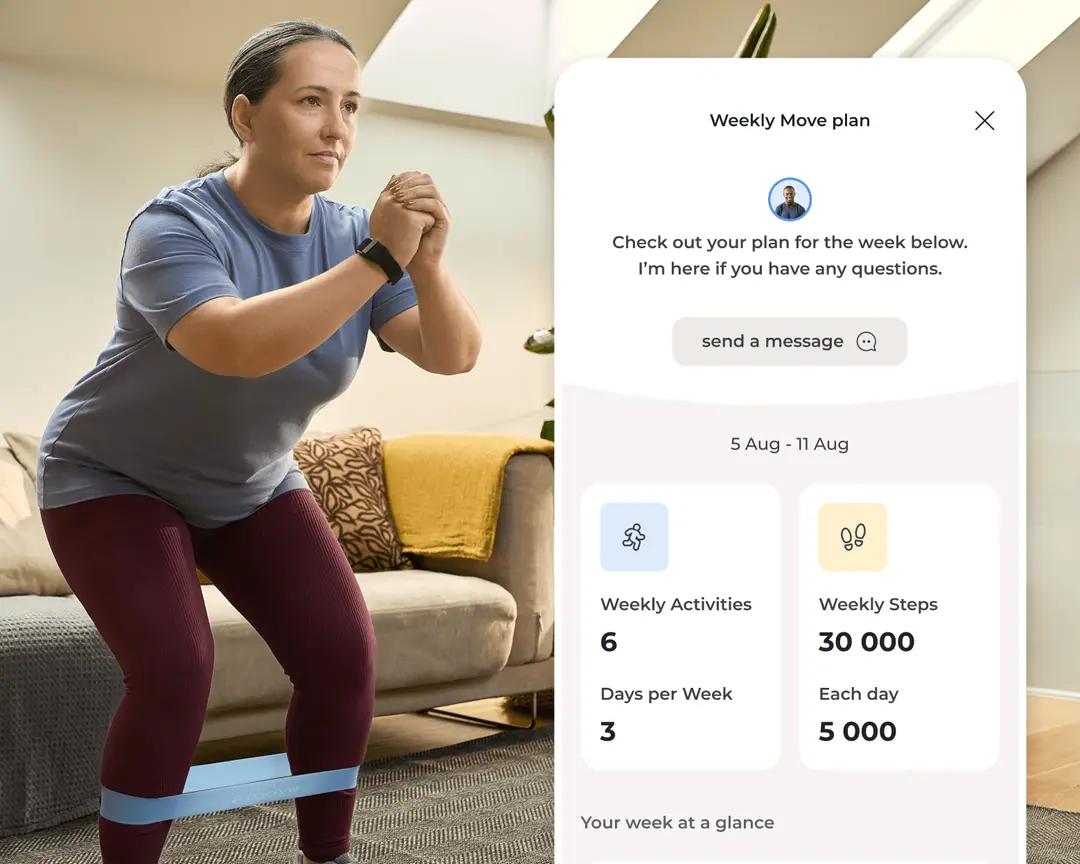
You do not need a gym or equipment. Bodyweight exercises and resistance bands, done consistently three to four times a week for 20 to 30 minutes, are enough to support lean muscle. Consistency matters more than intensity.
The best time to start is now, before you stop. Building muscle while Saxenda is still working means you arrive at the transition with a stronger foundation. Starting from scratch after appetite has returned is a harder place to begin.

If you are switching to a different GLP-1 medication
Some people stopping Saxenda are moving to a once-weekly medication rather than stopping GLP-1 treatment entirely.
Saxenda clears from your system quickly, usually within a few days. Most people can transition to a new medication without a long gap, though your prescriber will guide the specific timing.
The most important thing to understand is this: lean muscle you build now carries directly into any new medication. Lean mass you lose now becomes a deficit the new medication inherits. If you stop Saxenda and start something new without addressing lean mass first, you bring a weaker metabolic baseline into the next chapter.
Start movement before the switch, not after. That is the sequence that tends to work best.
How Sword Move supports the transition off Saxenda
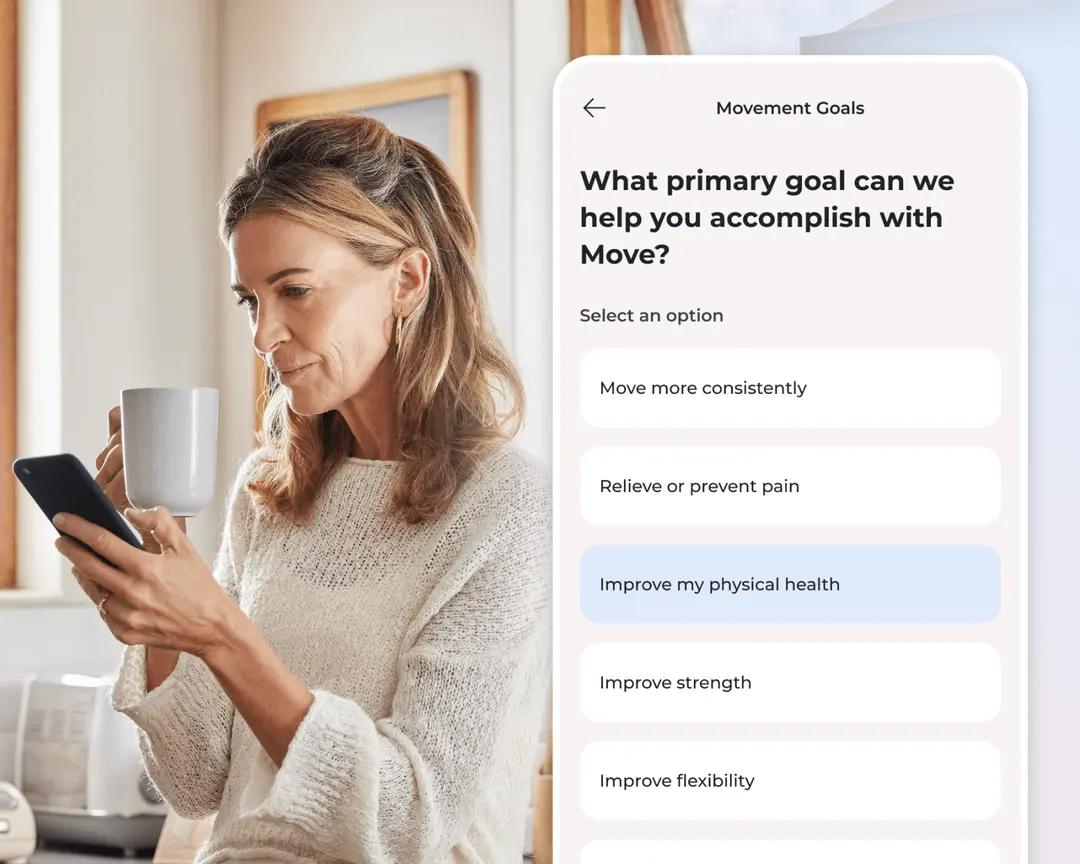
Knowing movement matters is one thing. Having a plan you can actually follow through the uncertainty of stopping a medication is another.
Sword Move gives you structured movement designed for people managing weight and metabolic health during and after GLP-1 treatment. Every plan is built to protect and rebuild lean muscle, not just get you more active.
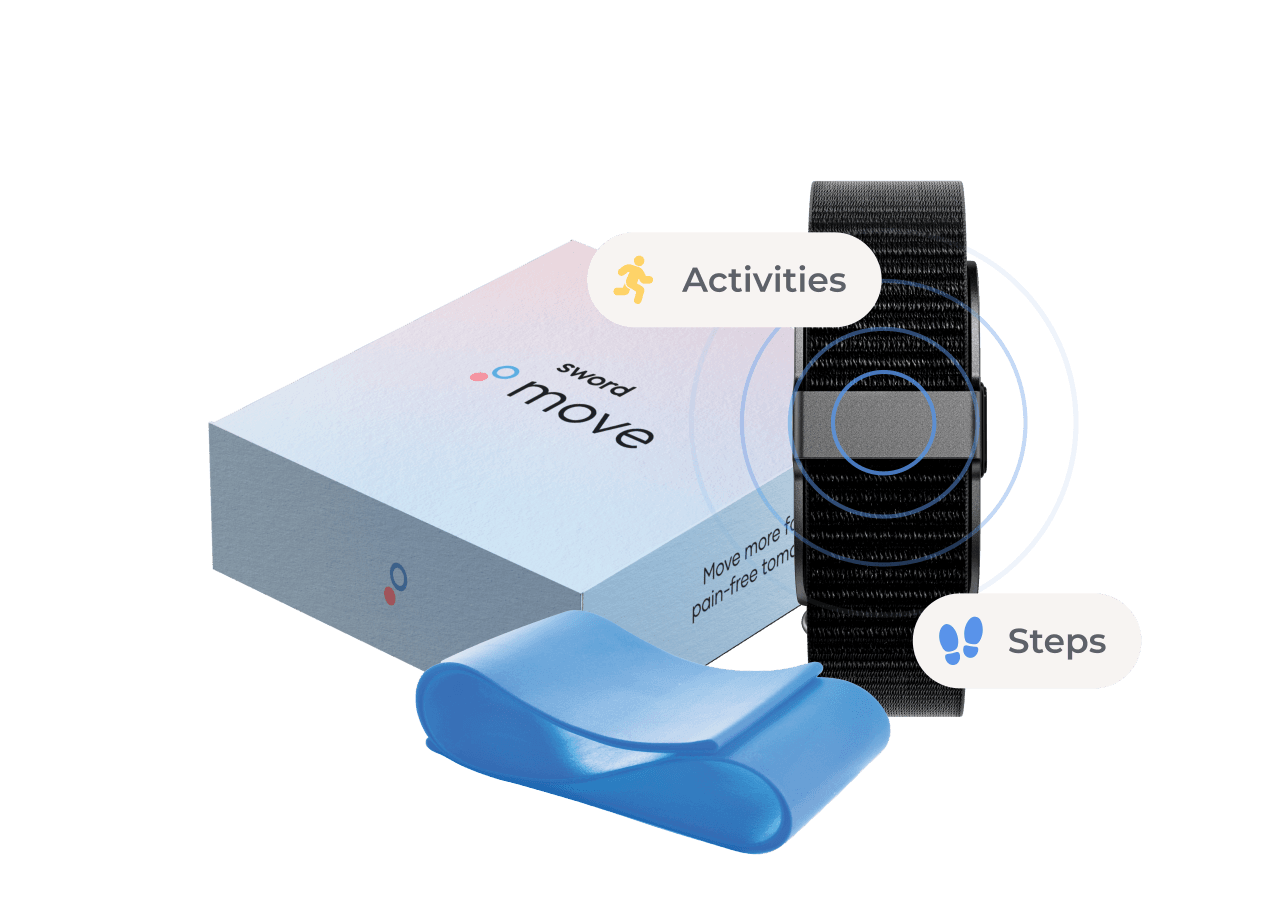
Each Move member is paired with a physical health specialist who holds a doctor of physical therapy degree. They build a personalized plan around your current fitness level, goals, and schedule. Sessions are short and done from home — no gym, no equipment, and no prior fitness experience needed. Your activity is tracked automatically, and the plan adapts as you get stronger.
Get started with Sword Move for whole-body strength
In real-world data, 69% of inactive or insufficiently active members reached active or healthy active status within 10 weeks (Sword Health internal data, 2024).⁴ That kind of shift in activity baseline is associated with a higher resting metabolism, better lean muscle retention, and a more stable foundation after stopping Saxenda.
Weight regain after Saxenda is not about willpower. It has a mechanism, and that mechanism has a solution. Lean muscle, built through movement, is what holds your results together after the medication ends.
If your employer or health plan includes coverage for Sword Move, you may be able to access it at no out-of-pocket cost. Check your eligibility now and you could get started right away.
About the author

Sword Editorial Team
Evidence-based healthcare insights