
vs

MSK care that saves you millions
Hinge offers workouts. Sword delivers clinical-grade care with Doctors of Physical Therapy and AI, driving unmatched clinical and financial outcomes.
2 out of 3 companies choose Sword
Proven outcomes, validated ROI, and clinically-guided care that actually works.
Chosen by those that demand better pain care


Real differences that drive results
With clinical rigor, industry-leading ROI, and validated outcomes, Sword delivers results that Hinge simply can’t match.
| Sword | Hinge | |
|---|---|---|
| Personalized Care | Individualized clinical programs tailored to each member | One-size-fits-all programs |
| Clinical-grade care | 100% of care delivered by Doctors of Physical Therapy | Members primarily interact with non-clinical staff (health coaches) |
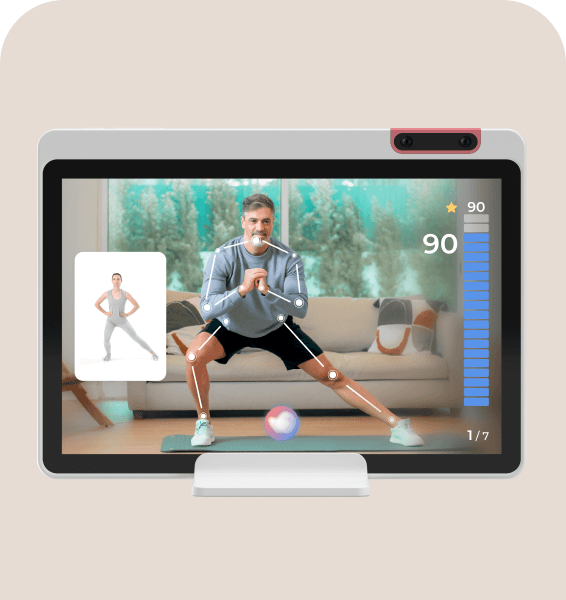
| Real-time feedback | Real-time biofeedback on every exercise | No feedback on the majority of exercises |
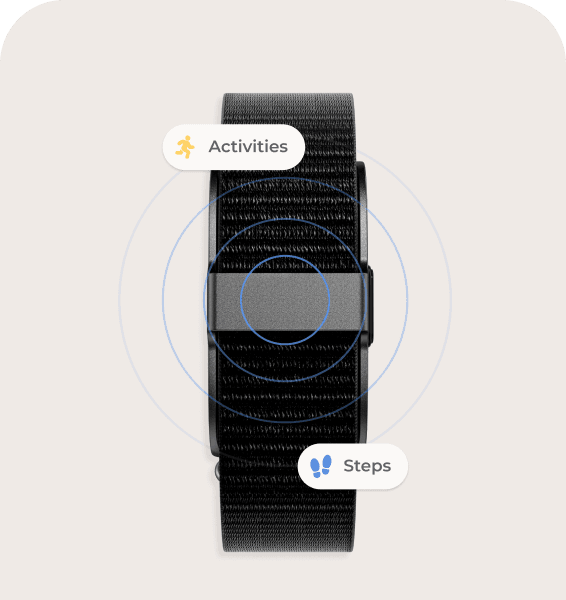
| Medical device | 100% of members have access to an FDA-listed medical device | No device, exercises performed 10 ft. away from a small phone screen |
| Clinical protocol | Session data reviewed daily by the member's Doctor of Physical Therapy | No clinical data available to personalize or adjust the program |
Even more reasons you'll love Sword
Beyond superior clinical outcomes, Sword delivers the innovation, security, and scalability that modern enterprises demand.

Choose Sword for guaranteed ROI
Sword has the industry's top validated ROI, a 3.2:1 savings ratio. Get started now on ending pain for your people.
Footnotes
- 1
Sword Health. Risk Strategies Consulting analysis: Validated average savings of $3,177 per engaged member per year, translating to a 3.2:1 ROI. https://swordhealth.com/insights/gated-reports/risk-strategies-consulting-analysis
- 2
Cleveland Clinic. Transcutaneous electrical nerve stimulation (TENS). Cleveland Clinic. Updated 2023. Available at: https://my.clevelandclinic.org/health/treatments/15840-transcutaneous-electrical-nerve-stimulation-tens
- 3
Gouveia ÉR, et al. Digital therapeutics for musculoskeletal conditions: a systematic review and meta-analysis. J Clin Med. 2024;13(15):4366. doi:10.3390/jcm13154366. Available at: https://www.mdpi.com/2077-0383/13/15/4366
- 4
Clinical success for underserved populations validated the following studies
Rural populations – Scheer J, et al. Engagement and utilization of a complete remote digital care program for musculoskeletal pain management in urban and rural areas across the United States: longitudinal cohort study. J Med Internet Res. 2023;25:e44316. doi:10.2196/44316. PMID: 36735933; PMCID: PMC10132051. Available at: https://pubmed.ncbi.nlm.nih.gov/36735933/
Ethnic and racial minorities – Scheer J, et al. Racial and ethnic differences in outcomes of a 12-week digital rehabilitation program for musculoskeletal pain: prospective longitudinal cohort study. J Med Internet Res. 2022;24(10):e41306. doi:10.2196/41306. Available at: https://www.jmir.org/2022/10/e41306
Older adults – Areias AC, et al. Managing musculoskeletal pain in older adults through a digital care solution: secondary analysis of a prospective clinical study. JMIR Rehabil Assist Technol. 2023;10:e49673. doi:10.2196/49673. Available at: https://rehab.jmir.org/2023/1/e49673
Lower socioeconomic status – Dias Correia F, et al. The potential of a multimodal digital care program in addressing healthcare inequities in musculoskeletal pain management. npj Digit Med. 2023;6:121. doi:10.1038/s41746-023-00936-2. Available at: https://doi.org/10.1038/s41746-023-00936-2
Ranges of body weights – Pereira AP, et al. Evaluating digital rehabilitation outcomes in chronic musculoskeletal conditions across non-obesity, obesity, and severe obesity. J Pain Res. 2025;18:73–87. doi:10.2147/JPR.S499846. Available at: https://doi.org/10.2147/JPR.S499846
- 5
Areias AC, et al. Transforming veteran rehabilitation care: learnings from a remote digital approach for musculoskeletal pain. Healthcare (Basel). 2024;12(15):1518. doi:10.3390/healthcare12151518. Available at: https://www.mdpi.com/2227-9032/12/15/1518
- 6
Janela D, et al. Recovering work productivity in a population with chronic musculoskeletal pain: unveiling the value and cost-savings of a digital care program. J Occup Environ Med. 2024;66(7):595–603. doi:10.1097/JOM.0000000000003191. PMID: 39016261. Available at: https://pubmed.ncbi.nlm.nih.gov/39016261/
- 7
Sword Health. Proven ROI: Performance guarantees with no client loss due to ROI. Sword Health. 2024. Available at: https://swordhealth.com/proven-roi
- 8
Sword Health. Sword Predict ROI analysis. Sword Health. 2024. Available at: https://swordhealth.com/insights/gated-reports/sword-predict-roi
- 9
Costa F, et al. Telerehabilitation of acute musculoskeletal multi-disorders: prospective, single-arm, interventional study. BMC Musculoskelet Disord. 2022;23:29. doi:10.1186/s12891-021-04891-5. Available at: https://doi.org/10.1186/s12891-021-04891-5
- 10
Areias AC, et al. Impact on productivity impairment of a digital care program for chronic low back pain: a prospective longitudinal cohort study. Musculoskelet Sci Pract. 2023;63:102709. doi:10.1016/j.msksp.2022.102709. Epub 2022 Dec 12. PMID: 36543719. Available at: https://pubmed.ncbi.nlm.nih.gov/36543719/
- 11
Janela D, et al. Digital care programs for chronic hip pain: a prospective longitudinal cohort study. Healthcare (Basel). 2022;10(8):1595. doi:10.3390/healthcare10081595. PMID: 36011251; PMCID: PMC9408636. Available at: https://pubmed.ncbi.nlm.nih.gov/36011251/


