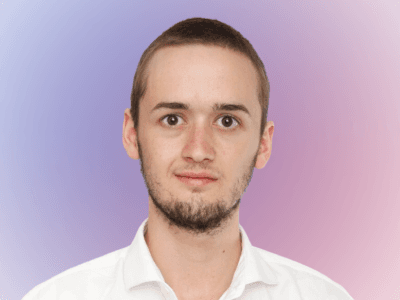
António Farinhas is an AI Research Scientist at Sword Health working on natural language processing and the evaluation of large language models. His research centers on a deceptively difficult problem: building the methods and frameworks that allow AI systems to be measured honestly, not just against narrow benchmarks, but against the standards of performance that matter in real clinical settings.
Before joining Sword, António spent five years as an ML/NLP Researcher at Instituto de Telecomunicações and published across NeurIPS, ICLR, ICML, EMNLP, and JMLR. His doctoral thesis, completed Summa cum laude at Instituto Superior Técnico, addressed the foundations of quality-controlled and reliable language generation, from practical applications through to the underlying theory. That depth of research now informs how Sword measures and improves the AI systems that support clinical care.
Better evaluation is not a quality-assurance step that happens after the work. It is the work. The standards you hold a system to before deployment determine what it can safely do in the world.
Education
António holds a PhD in Electrical and Computer Engineering from Instituto Superior Técnico, completed Summa cum laude in 2025. His doctoral thesis, "Quality-Controlled and Reliable Language Generation: From Applications to Theory," addresses the foundations of building language systems that perform consistently and responsibly. He also holds a Master's degree in Aerospace Engineering from Instituto Superior Técnico, completed with a thesis grade of 20/20, bringing a rigorous mathematical and systems-level grounding to his work in NLP.
Experience
Before joining Sword Health, António spent five years as an ML/NLP Researcher at Instituto de Telecomunicações, where he developed expertise in natural language generation and evaluation and published work at venues including NeurIPS, ICLR, ICML, EMNLP, and JMLR. During that period, he was a Short-Term Scholar at Carnegie Mellon University, contributing to machine translation research as part of the MAIA project. At Sword, he focuses on the evaluation and reliability of generative AI systems for healthcare applications.