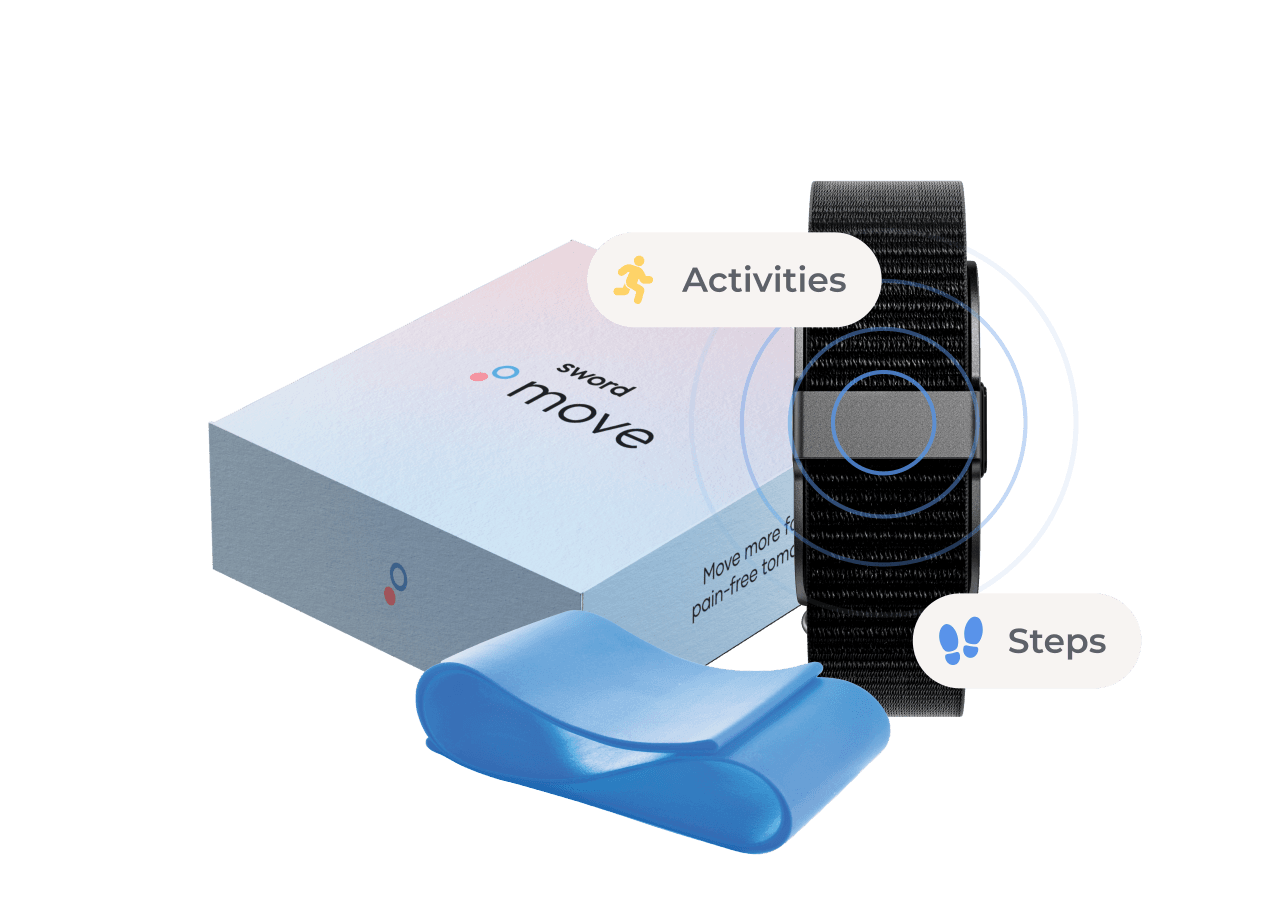
Check if Move is covered for you
The Sword Summary Warm-up
Don’t have time for the full workout? We’ve got you covered with a quick, high-intensity session. Here are the key takeaways:
- Zepbound (tirzepatide) activates two appetite-suppressing receptors at once, which is why early weight loss is rapid. It is also why the plateau can arrive suddenly.
- A plateau does not mean Zepbound has stopped working. It means the body has adapted and one variable is missing.
- Some of the weight lost in the early weeks may have been lean muscle, not fat. When muscle is lost, resting metabolic rate drops and a lower metabolic rate is the underlying reason the scale stalls.
- More calorie restriction can make things worse, not better. The lever that breaks a Zepbound plateau is structured, strength-focused movement.
- Sword Move, provides clinically guided movement support to help rebuild lean mass, restore resting metabolic rate, and keep progress moving.
The scale moved every week for the first few months. Then it stopped.
You did not change anything. You are still taking Zepbound (tirzepatide). Your appetite still feels different. You are eating less than you were before you started. And yet the number has not budged in two weeks, maybe three. It feels like the medication stopped working — or like your body is failing some test you did not know you were taking.
It has not stopped working. And you have not done anything wrong. What you are experiencing is a Zepbound plateau — one of the most common experiences people report on tirzepatide, with a clear physiological explanation. More importantly, there is a specific intervention that addresses it, and it is not eating less.
Zepbound works faster, and that is exactly why it plateaus
Zepbound's active molecule, tirzepatide, targets two receptors at once: the GLP-1 receptor and the GIP receptor. Unlike single-receptor GLP-1 medications such as Ozempic (semaglutide) and Wegovy (semaglutide), the combination suppresses appetite more strongly and more quickly — and for many people, the early weight loss is noticeably faster.
That speed is Zepbound working exactly as designed.
It is also what makes the plateau feel so abrupt when it arrives. When the scale has been moving week after week, a two-week stall does not feel like a normal part of the process. It feels like something has broken.
Nothing has broken. The plateau is the next phase of the same physiological process — the drug continues to work, and the body has adapted to the new environment it is living in.
Understanding why the adaptation happens is the first step toward addressing it.
The weight you lost may not have been all fat
Zepbound works by significantly reducing appetite. For most people, that means a meaningful calorie reduction and rapid early weight loss. Three shifts happen inside the body at the same time (and the third is the one the scale does not show you).
- Metabolism adapts. As weight decreases, the body recalibrates how many calories it needs to function. This is a natural response to sustained weight loss — not a malfunction.
- Daily movement quietly decreases. When you are eating less, energy levels can dip. Steps decline and sitting time increases — small changes that go largely unnoticed but reduce daily calorie burn in ways that compound over weeks.
- Some of what you lost was not fat. Research suggests that up to 39% of weight lost during GLP-1 therapy can come from lean muscle mass rather than fat, particularly in people who are not doing structured movement alongside the medication.¹ For someone who has lost 25 pounds on Zepbound, that could mean nearly 10 pounds of muscle, not fat.
That third shift is what explains the plateau. Muscle is metabolically expensive tissue — the body burns more calories maintaining it than it does maintaining fat. Lose enough of it, and resting metabolic rate drops. The same level of eating that produced results before now produces nothing.
The drug has not failed. The body is running on a smaller engine than it was four weeks ago.
Why eating less will not fix this
When progress slows, the instinct is to restrict further — if fewer calories worked before, surely more restriction should restart the momentum.
More restriction without movement accelerates lean mass loss. A body already drawing on muscle for fuel draws on more of it when calories drop again, pushing resting metabolic rate lower still. The fatigue and reduced energy that accompany muscle loss deepen alongside the plateau.
The problem is body composition: what the weight is made of, not how much food is coming in. Eating less cannot fix a composition problem — only movement can.

What restarts progress after a Zepbound plateau?
The variable that breaks a Zepbound plateau is structured, strength-focused movement — not cardio, not increased daily step counts, but resistance-based movement that gives the body a specific reason to preserve and rebuild lean muscle.
When resistance training is introduced during a caloric deficit, the dynamic shifts. Fat becomes the preferred fuel, and muscle is preserved because the body now has a biological reason to hold onto it. As lean mass rebuilds, resting metabolic rate rises — and the same level of eating that produced nothing during the plateau begins producing results again.
You came to Zepbound with a weight loss goal, not a fitness identity. So it is worth being direct: rather than a recommendation to become a gym regular or overhaul a lifestyle, think of structured movement as the specific clinical tool for the specific composition problem the plateau represents.
In practice, breaking a Zepbound plateau looks like this:
What | Why |
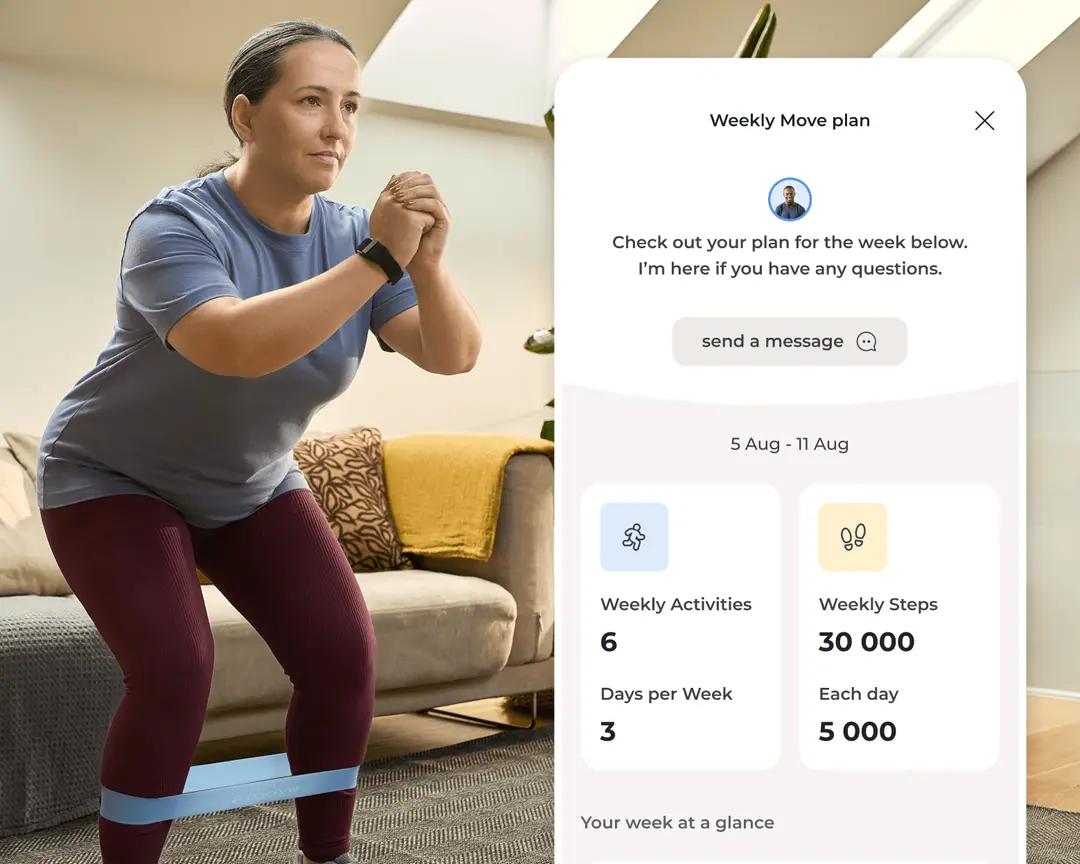
Resistance bands or bodyweight exercises | Signals muscle preservation without joint overload |
20 to 30 minutes, 3 to 4 times a week | Enough stimulus; does not require intensity |
Home-based sessions | No equipment required, no commute |
Consistent and short over occasional and intense | Frequency matters more than effort level |
The bar is lower than most people expect. Short, regular sessions are enough.
What a plan built for this actually looks like
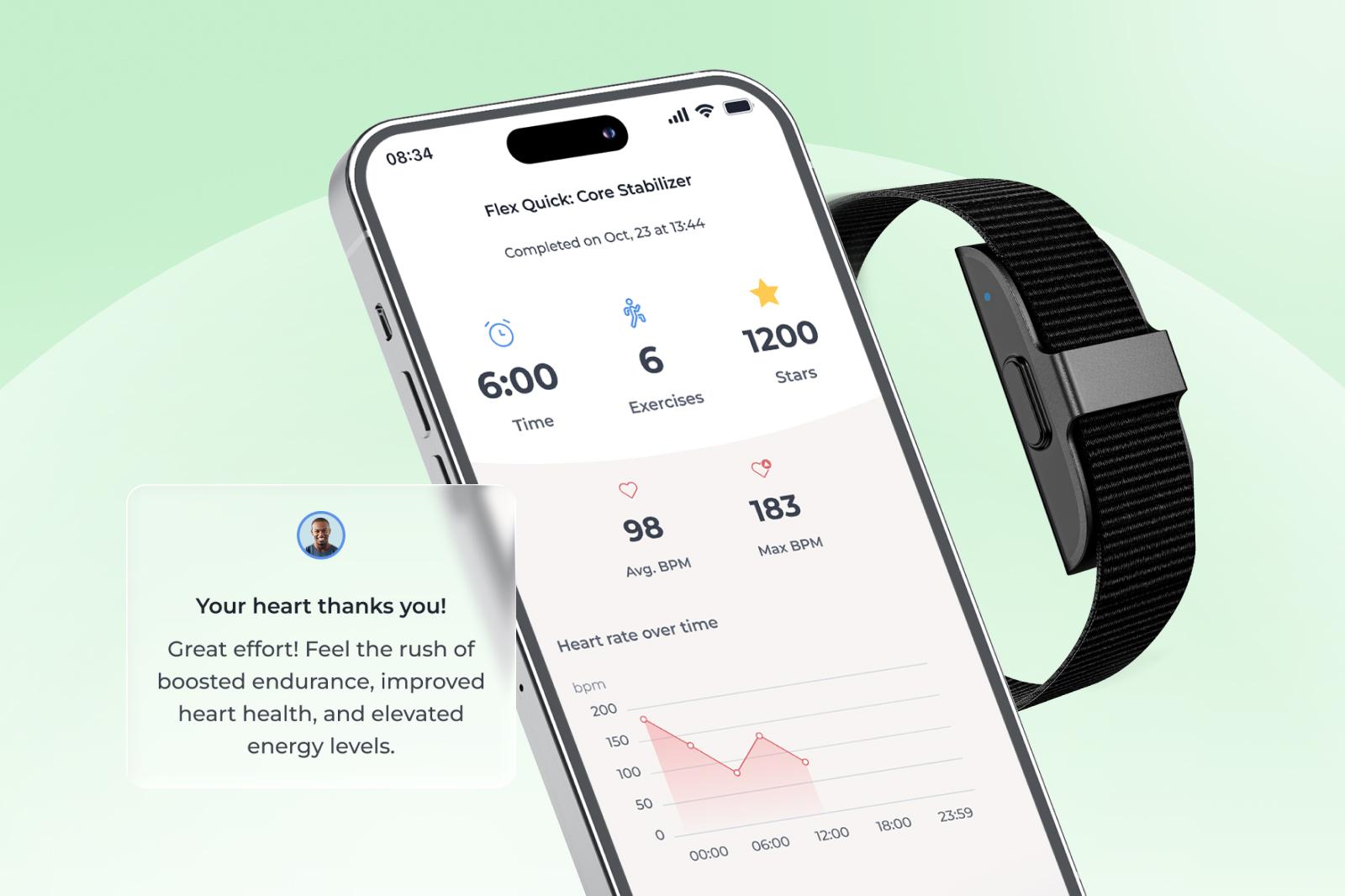
Knowing that structured movement breaks a Zepbound plateau is one thing. Having a plan that is safe, personalized to where you are right now, and consistent enough to stick with is another thing entirely.
Move is Sword's whole-body movement program, built for people managing weight and metabolic health. It is designed for exactly the situation someone on Zepbound faces: meaningful weight loss already achieved, a plateau to break, and lean mass to protect.
Get started with Sword Move for whole-body strength
In Sword's member base, 69% of inactive and insufficiently active members reach active or healthy active status within 10 weeks — internal data from Sword's 2024 MET-min analysis.² For people on Zepbound, that shift is exactly the metabolic change that breaks a plateau.
If your employer or health plan covers Move, getting started typically costs nothing out of pocket. You can check your coverage in about two minutes.
Get past the Zepbound plateau with a personalized weight management plan
Two weeks without progress on Zepbound is not failure. The body has adapted — and an adapted body needs one thing that appetite suppression alone cannot provide.
The plateau is a predictable phase of the same process that produced the early results — Zepbound has not failed. What changes at this stage is the addition of a single variable: structured movement that shifts body composition, protects lean mass, and raises resting metabolic rate.
There is also a longer-term reason this matters. Research shows that when people stop GLP-1 treatment, up to two-thirds of weight lost is typically regained within a year — with the majority of that regain being fat, not muscle.³ The lean mass preserved during treatment is what makes results more durable after stopping. Starting now, while Zepbound is working, is significantly easier than starting later.
That variable is within reach — and it requires far less than most people expect.
About the author

Sword Editorial Team
Evidence-based healthcare insights